

Vietnam Agarwood Tourism: Awakening the “National Treasure” on the Global Economic Map
VAWA - From the vast Aquilaria forests in the Central region to world-class agarwood appreciation spaces in Khánh Hòa, Vietnamese agarwood is gradually forming a new economic value chain called “agarwood tourism”. Not only a rare and precious product, agarwood is expected to become a national cultural-economic brand on the world map.
VOV.VN - From the vast eaglewood forests in Central Vietnam to world-class agarwood appreciation spaces in Khánh Hòa, Vietnamese agarwood is gradually forming a new economic value chain called "agarwood tourism." More than just a rare commodity, agarwood is expected to become a national cultural and economic brand on the world map.
The cross-Vietnam journey of the "king of scents"
For thousands of years, Vietnam has been renowned as the land possessing the rarest agarwood and kynam in the world. In ancient Oriental texts, Vietnamese agarwood was once considered a "national treasure" used in royal courts, religious practices, and medicine.
Today, along with the development of experiential tourism, localities possessing large eaglewood raw material areas such as Quảng Nam, Hà Tĩnh, and Khánh Hòa are gradually connecting to form the "Vietnamese Agarwood Route" – a heritage corridor combining culture, ecology, and international trade.
If Khánh Hòa is considered the "land of agarwood" with its spiritual centers, agarwood appreciation spaces, and high-end products serving international guests, then Quảng Nam and Hà Tĩnh are emerging as capitals for raw materials and eco-tourism associated with the traditional agarwood-making craft.
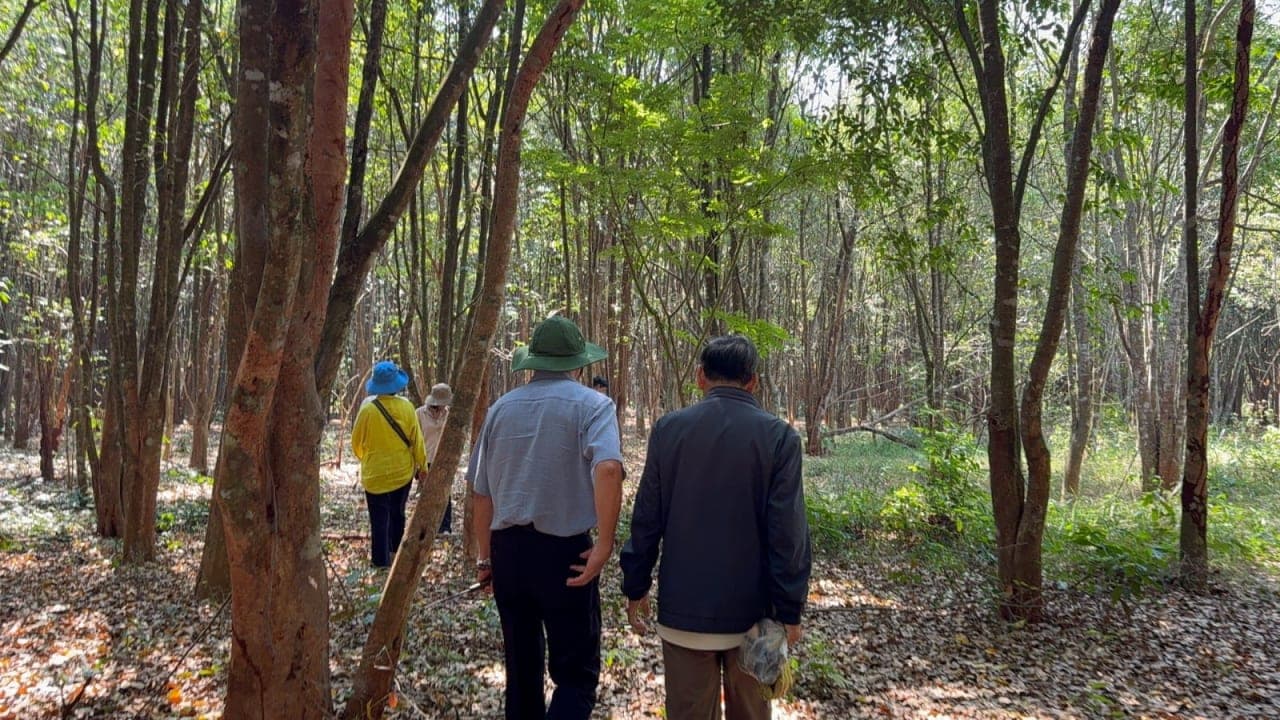
During a 7-day trip to Vietnam, Mr. Al-Mansoori, a businessman from Dubai (UAE), said he completely changed his perspective on the Vietnamese agarwood industry after experiencing the raw material regions firsthand.
“I only knew about Vietnamese agarwood through traders in Dubai. But when I entered the eaglewood forest in Tiên Phước (Quảng Nam) and saw artisans crafting agarwood in Hà Tĩnh with my own eyes, I truly understood the real value of this product. This is not just a commodity, but culture and art,” he shared.
According to this businessman, during the trip, he signed a memorandum of understanding to import agarwood products worth over 200,000 USD with a Vietnamese partner.
From "poverty alleviation tree" to "wealth creation tree"
The shift from raw extraction to the development of experiential tourism chains is opening up a new direction for many rural areas in Central Vietnam.
In Phúc Trạch commune, Hương Khê district, Hà Tĩnh province – considered one of the largest eaglewood regions in the country – the profession of growing and crafting agarwood is creating a stable income for thousands of households.
Artisan Phạm Tiến Dũng, owner of a local agarwood production facility, said that previously, eaglewood trees were mainly grown spontaneously, and their economic value was not high. However, in recent years, when combined with craft village tourism and the OCOP program, the value of the eaglewood tree has changed completely.
“Tourists come not only to buy agarwood incense, bracelets, or essential oil, but also to experience the process of creating agarwood, visit eaglewood gardens, and learn about Vietnamese agarwood culture. There are ornamental eaglewood trees that customers pay hundreds of millions of VND to take home for display,” Mr. Dũng said.
Beyond handicrafts, many businesses have now invested in developing high-end product lines such as agarwood essential oil, agarwood perfume, agarwood tea, or wellness therapies combining meditation and natural fragrances.
According to industry associations, the value chain from growing eaglewood, crafting, and trading to experiential tourism is currently creating tens of thousands of jobs in the Central region, while contributing significantly to local service and tourism revenue.
A national strategy needed for the "Agarwood Route"
Despite possessing great potential, many experts believe that the Vietnamese agarwood tourism industry is still developing in a fragmented manner, lacking connectivity and a clear national brand strategy.
Assoc. Prof. Dr. Nguyễn Minh Triết, an expert in tourism strategic planning, commented:
National Revenue=(Wellness Tourism+Perfume Industry)×Vietnamese Agarwood Brand
According to Mr. Triết, Vietnamese agarwood needs to be elevated into a luxury industry associated with health tourism, high-end resorts, and indigenous culture.
“Vietnam can absolutely build thematic tourism tours about agarwood, similar to perfume tourism in France or ginseng tourism in South Korea. The important thing is to create a chain of links between localities with strengths in agarwood to form a unified national brand,” he said.
Experts also believe that a set of national standards for agarwood quality serving tourism and export should be established soon to limit the situation of fake and adulterated goods that affect the reputation of the Vietnamese brand in the international market.
In addition, the conservation of eaglewood forests, the development of sustainable agarwood cultivation technology, and the training of specialized tourism human resources are also key factors for the long-term development of this economic sector.
Awakening the "national scent"
Agarwood is not only a rare product but also a part of Vietnamese culture and consciousness. When combined with tourism, technology, and a national brand strategy, this "scent of heaven and earth" can absolutely become a new economic driver for Vietnam in the future.
From the eaglewood forests of Central Vietnam to high-end coastal resorts, the journey of Vietnamese agarwood is opening up a space full of economic potential – where traditional cultural values are transformed into global competitive strength.