
Chairman of the Vietnam Agarwood Association attends the 9th National Congress of VUSTA, bringing recommendations to amend the Land Law
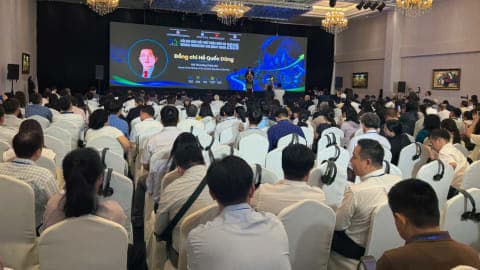
VAWA - On August 27, at the National Convention Center in Hanoi, Mr. Pham Van Du, Chairman of the Vietnam Agarwood Association, attended the 9th National Congress of Delegates of the Vietnam Union of Science and Technology Associations for the 2026–2031 term.
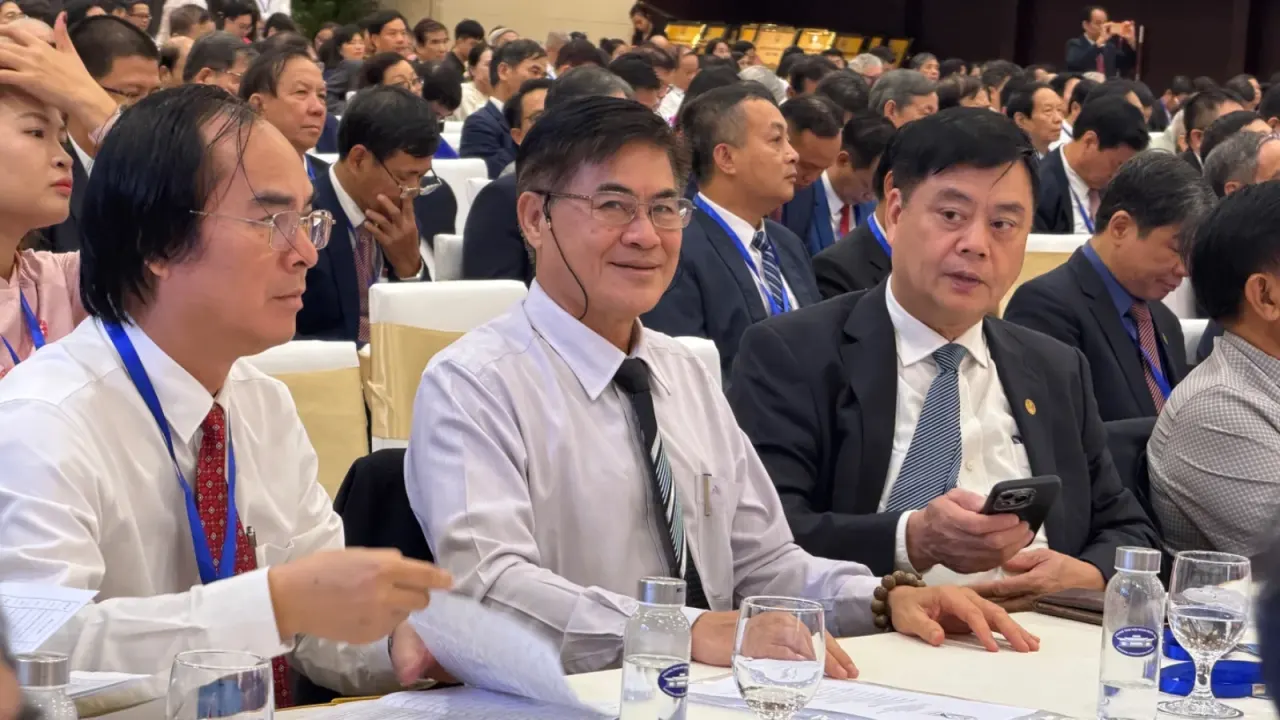
Notably, attending this Congress, the Chairman of the Vietnam Agarwood Association brought along a presentation contributing feedback on the amendment of the Land Law, developed from the practical realities of developing aquilaria planting areas, agarwood creation, and the activities of the business community and agarwood growers nationwide.
In the presentation, the Vietnam Agarwood Association stated that the aquilaria tree that produces agarwood is a forestry tree with a long investment cycle and high economic value, but the development of the raw material region is still currently affected by many regulations on land, forestry land, land use term limits, and mechanisms for multi-value exploitation on the same area.
From these practical realities, the Association recommended that the process of amending land policies must ensure sufficiently long land use terms and favorable extension mechanisms for production models with long investment cycles; at the same time, it is necessary to study appropriate multi-purpose land use mechanisms so that planting areas can be linked with primary processing, preservation, research, ecological experiences, and the development of the agarwood value chain.
One content of special concern to the Association is the full recognition and protection of the asset value of aquilaria trees, trees that have produced agarwood, and legally planted forests when the State reclaims land. According to the Association, valuation needs to take into account tree age, density, variety, agarwood-inducing techniques, investment costs, and the actual value of the product, instead of merely applying the conventional calculation method for general crops.
The Association also proposed strengthening the connection of land, forestry, planting area, and traceability data; encouraging voluntary land accumulation and linkage to form concentrated raw material zones, serving the deep processing of agarwood products such as essential oils, pharmaceuticals, cosmetics, handicrafts, and products with export value.
The consistent viewpoint of the Association is that improving the laws must create conditions for forestry economic development but must not become a loophole for converting natural forests, dividing plots for development, or engaging in illegal real estate business and resorts.
Bringing these recommendations to the 9th Congress of the Vietnam Union of Science and Technology Associations also demonstrates the desire of the Vietnam Agarwood Association to bring the voices from production practices, growers, and businesses into the policy-making process, thereby gradually forming a stable legal corridor for the Vietnamese agarwood industry to develop sustainably and enhance its value in domestic and international markets.