
高效沉香种植技术:从种苗到养护的农民易懂指南
VAWA - Agarwood树(又称Dó Bầu树)长期以来被视为一种具有高经济价值的林业树种,因其能够产生agarwood——一种用于香料、工艺品和出口的珍贵原料。近年来,许多地方已关注以商品化方向发展Dó Bầu种植区,如果掌握了种植技术,这将为农民增加收入开辟机会。
Effective Agarwood Cultivation Techniques: A Simple Guide for Farmers from Seedlings to Care
The agarwood tree (also known as the Dó Bầu tree) has long been considered a high economic value forestry species due to its ability to produce agarwood – a precious material used in fragrances, handicrafts, and exports. In recent years, many localities have focused on developing Dó Bầu cultivation areas towards commodity production, opening up opportunities to increase income for farmers if they master cultivation techniques.
To ensure good growth, high survival rates, and the potential for quality agarwood production, farmers need to pay attention to everything from seedling selection and soil preparation to long-term care.
Which regions are suitable for agarwood trees?
The Dó Bầu tree is suitable for humid tropical climates, with average temperatures ranging from 20 - 25 degrees Celsius, annual rainfall over 1,500 mm, and high air humidity.
In Vietnam, the tree grows well in many provinces in the Central region, Central Highlands, and the South, especially in well-drained hilly areas.
Farmers should choose loose, humus-rich soil with a cultivation layer depth of about 40 cm or more. It should not be planted on alum soil, limestone soil, dry sandy soil, or in areas prone to frequent flooding.
Seedling selection determines success
According to forestry experts, good seedlings are the key factor in helping trees grow quickly and limiting pests and diseases.
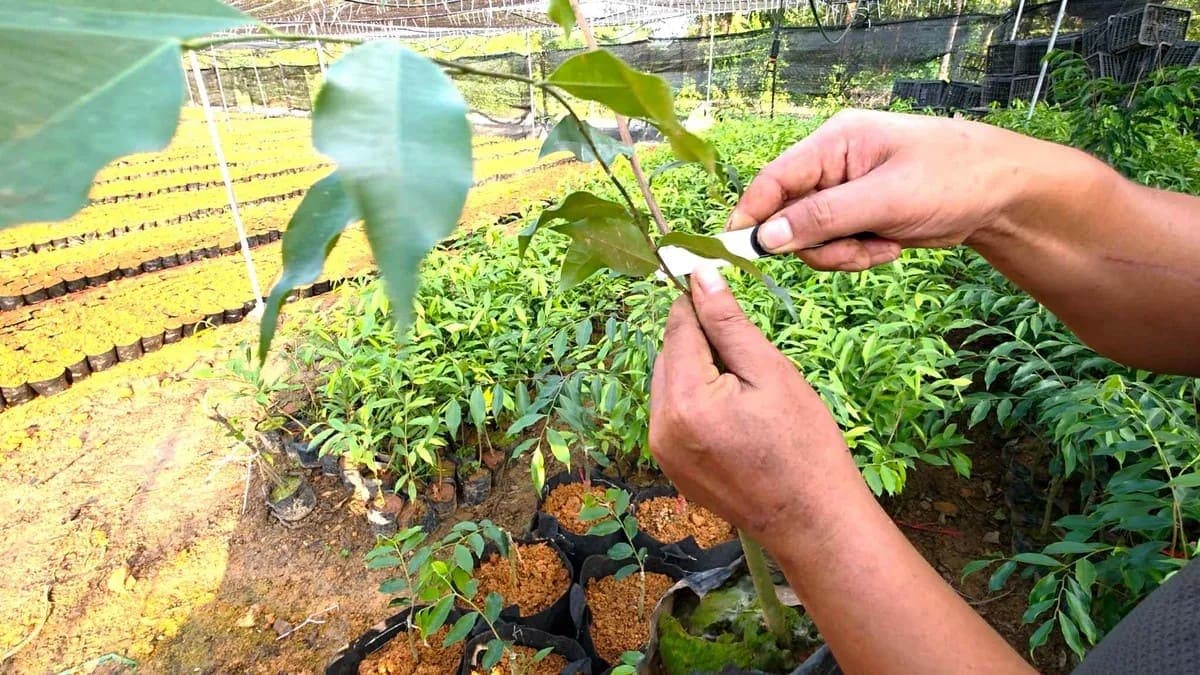
Seedlings grown from seeds should be chosen, with a height of 30 - 50 cm, straight stems, green leaves, strong roots, and no pests. Seedlings should be nurtured in polybags before leaving the nursery to increase their adaptability after planting.
Farmers need to purchase seedlings from reputable facilities with clear origins to avoid hybrid or poor-growing varieties.
Suitable planting season
The best time for planting is at the beginning of the rainy season, from May to August annually, depending on the region.
At this time, the soil is sufficiently moist, the weather is cool, the trees take root easily, and watering costs are reduced. If planted during the dry season, the seedling loss rate is usually higher.
Soil preparation and pit digging techniques
Before planting, it is necessary to clear weeds and clean the vegetation.
Dig pits with dimensions of approximately 30 x 30 x 30 cm or larger depending on the soil quality. Apply basal fertilizer using decomposed manure combined with organic bio-fertilizer, mix thoroughly with the topsoil, and fill the pits 10 - 15 days before planting.
This is an important step to provide initial nutrients for the young trees and help the root system develop strongly.
Reasonable planting density
Depending on the production purpose, the spacing can be arranged as follows:
3 x 3 m
3 x 6 m
4 x 5 m
If planting for timber combined with long-term agarwood induction, a wider spacing should be used to allow the trees to develop large trunks. If intercropping or aiming for high density in the early stages, they can be planted more closely.
Correct planting techniques
When planting, gently tear off the polybag, place the tree upright in the center of the pit, with the surface of the root ball level with the ground. Fill the soil tightly around the base, press lightly, and stake the tree if the area has strong winds.
After planting, cover the base with straw or dry grass to retain moisture.
Caring for agarwood trees by stage
Watering
In the first 1 - 2 years, the trees need to be kept moist regularly, especially during the sunny season.
Dry season: water 1 - 2 times/week depending on the weather
Rainy season: only water when the soil is too dry
Once the tree is larger and the root system is deep, the need for watering decreases significantly.
Weeding and soil loosening
Weed 2 - 3 times per year, especially during the rainy season. Combine this with light loosening around the base to keep the soil aerated, allowing roots to absorb nutrients better.
Pruning and canopy shaping
After 2 years of age, diseased, low-growing, or crossing branches should be pruned so the main trunk can grow straight.
Proper canopy shaping helps the tree receive enough light and increases growth.
Fertilizing
This can be divided into several rounds throughout the year:
Decomposed organic fertilizer
Balanced NPK
Urea in dosages appropriate for the tree's age
Do not apply too much nitrogen, as it makes the tree soft, weak, and susceptible to pests and diseases.
Pest and disease prevention
Dó Bầu trees are relatively hardy but can still encounter leaf-eating caterpillars, stem fungi, and root rot if waterlogged.
The most effective measures are:
Planting in well-drained areas
Regular garden sanitation
Pruning for ventilation
Early detection to treat with biological pesticides or according to the instructions of agricultural officers
When can agarwood be induced?
Typically, when trees are 6 - 8 years old or older and the trunk has reached a suitable size, agarwood induction techniques can be applied.
Currently, many places use biological methods or modern techniques instead of manual drilling and chemicals to protect the tree and improve agarwood quality.
Farmers should collaborate with specialized units, cooperatives, or experienced businesses to avoid risks.
A high-value path that requires patience
Growing agarwood is not a "get rich quick" model, as it is a long-term crop requiring investment capital and many years of care. However, with systematic planning, good seedling selection, and the application of correct techniques, the Dó Bầu tree can become a sustainable economic development direction for many rural areas.
In the context of increasing demand for essential oils, fragrances, and agarwood products, developing standardized raw material areas will help farmers increase value on the same cultivated land area.